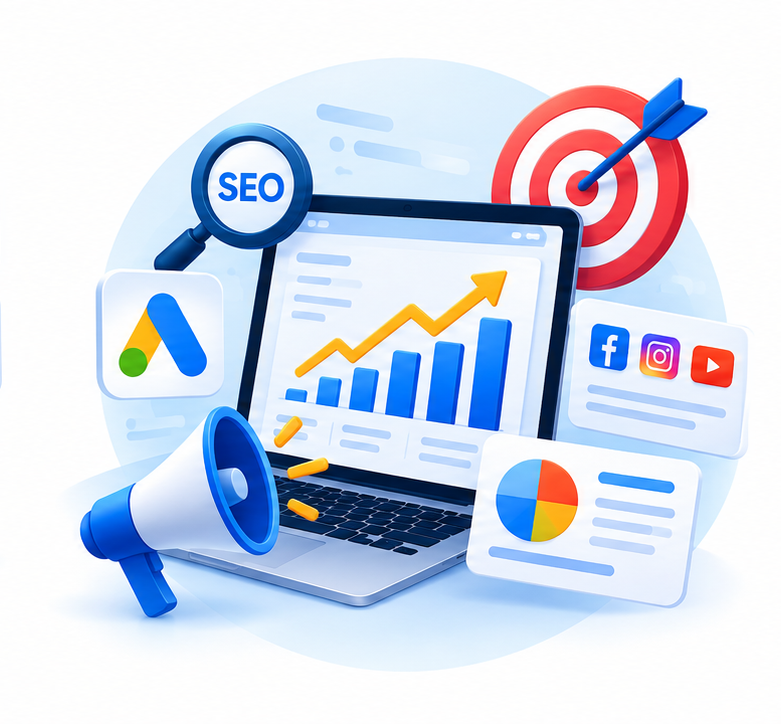
Digital marketing is the practice of promoting your business through online channels such as search engines, social media, email and websites, so that the right people discover you, trust you and buy from you. Today, almost every purchase begins with a phone or laptop, which makes a strong online presence essential for businesses of every size.
What Is Digital Marketing?
Digital marketing covers every effort to reach customers through the internet and connected devices. It includes ranking on Google, running paid ads, posting on social platforms, writing helpful articles, sending email newsletters and tracking how each activity performs.
Unlike traditional marketing such as hoardings, newspaper ads or pamphlets, digital marketing is measurable. You can see how many people viewed your ad, clicked your link, filled your form or bought your product. That clarity helps you spend money where it works and stop spending where it does not.
Why Digital Marketing Matters Today
Your customers are already online. They search for solutions, compare prices, read reviews and ask friends for recommendations, all on their screens. If your business does not appear in those moments, a competitor will.
Digital marketing also levels the playing field. A small local shop can reach customers across the country with a well-planned campaign, and a new brand can build trust without a huge advertising budget. What matters is a clear strategy, consistent effort and honest communication.
The Core Channels of Digital Marketing
1. Search Engine Optimization (SEO)
SEO helps your website appear higher in Google results when people search for what you sell. It combines keyword research, quality content, fast page speed, mobile-friendly design and trustworthy links from other sites. SEO takes time, but the traffic it brings is steady and does not stop when you pause spending.
2. Pay-Per-Click Advertising (PPC)
With PPC, you pay only when someone clicks your ad. Google Ads and social media ads let you target people by location, interest, age and search behaviour. PPC is ideal for quick results, product launches and seasonal offers, and a good manager keeps testing headlines and audiences to lower your cost per lead.
3. Social Media Marketing
Platforms such as Instagram, Facebook, LinkedIn and YouTube let you show the human side of your brand. Regular posts, short videos, customer stories and replies to comments build trust and keep you in people’s minds. Choose the platforms where your customers actually spend time instead of trying to be everywhere.
4. Content Marketing
Blogs, guides, videos and case studies answer your customers’ questions before they even speak to you. Helpful content earns trust, supports your SEO and gives you something valuable to share on social media and email. The best content is original, clear and written for people first and search engines second.
5. Email Marketing
Email remains one of the most reliable ways to stay in touch. Welcome messages, product updates, special offers and useful tips keep your audience engaged and bring past customers back. Because the people on your list have chosen to hear from you, results are often strong at a low cost.
6. Website and Conversion Optimization
Traffic is only useful if visitors take action. A clear layout, quick loading, simple forms, strong calls to action and visible contact details turn visitors into enquiries and sales. Small improvements here can raise your results without increasing your marketing budget.
Key Benefits of Digital Marketing
- Wider reach. Your business can be found by people in any city, not just your neighbourhood.
- Lower cost. You can start with a modest budget and increase it as results come in.
- Targeted audience. Show your message only to people likely to need it.
- Measurable results. Track clicks, leads, sales and return on investment in real time.
- Stronger relationships. Talk directly with customers through comments, messages and email.
- Flexibility. Change a campaign quickly when something is not working.
How to Build a Digital Marketing Strategy
- Set clear goals. Decide what success means, such as 50 enquiries a month or a 20 percent rise in online sales.
- Understand your audience. Learn who your customers are, what they search for and which problems they want solved.
- Check your website. Make sure it is fast, mobile-friendly, secure and easy to navigate before sending traffic to it.
- Pick the right channels. Start with two or three that suit your goals and budget, then expand.
- Create useful content. Publish articles, videos and offers that answer real questions.
- Track and improve. Review your numbers every month, keep what works and fix what does not.
A good strategy is simple, focused and patient. Businesses that succeed online rarely rely on one trick; they combine several channels and improve them steadily over time.
Frequently Asked Questions (FAQs)
1. What is digital marketing in simple words? It is promoting your products or services through the internet, using tools like Google search, social media, email and a business website.
2. How is digital marketing different from traditional marketing? Traditional marketing uses print, radio and hoardings, which are hard to measure. Digital marketing lets you target specific people and track exactly what each rupee or dollar achieves.
3. Is digital marketing suitable for small businesses? Yes. Even a small budget can reach local customers through Google Business Profile, social media and targeted ads, making it one of the most affordable ways to grow.
4. How long does it take to see results? Paid ads can bring visitors within days. SEO and content marketing usually take three to six months to show strong, lasting results.
5. How much should I spend on digital marketing? There is no fixed amount. Many businesses start with a small monthly budget, measure results and then increase spending on the channels that bring the best returns.
6. Which channel is best for my business? It depends on your audience. Service businesses often gain from SEO and Google Ads, retail brands from Instagram and Facebook, and B2B companies from LinkedIn and email.
7. Do I need a website for digital marketing? A website is strongly recommended. It is your online home where visitors learn about you, trust you and contact you, and most campaigns lead people there.
8. Can I do digital marketing myself? You can handle the basics, but strategy, ad management and SEO take time and skill. Many owners hire an agency so they can focus on running the business.
9. How do I measure success? Track website visits, leads, conversion rate, cost per lead and sales. Tools like Google Analytics make these numbers easy to follow.
Conclusion
Digital marketing is no longer optional; it is how modern customers find and choose businesses. By combining SEO, advertising, social media, content and email with a fast, trustworthy website, you can attract the right audience and turn interest into steady revenue.
Start small, measure carefully and improve every month. If you would like expert help, the Hulkmask team can plan and manage a digital marketing strategy built around your goals. Contact us today for a free consultation.